Inconel 718: Comprehensive Guide to Properties, Applications, Heat Treatment, and Industrial Value
Wiki Article
Inconel 718 is one of the most widely used nickel-based superalloys in modern engineering, known for its exceptional strength, corrosion resistance, and high-temperature performance. Developed for demanding environments such as aerospace engines, power generation systems, and oil & gas operations, this alloy offers a unique combination of mechanical durability and thermal stability. Its ability to maintain structural integrity under extreme stress and temperature conditions makes it a critical material in industries where failure is not an option.
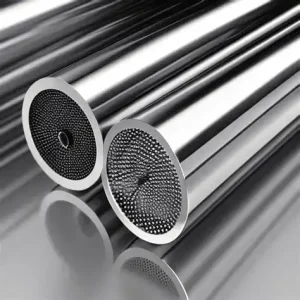
As global industries continue to push the limits of performance and efficiency, materials like Inconel 718 have become essential. Whether used in turbine blades, fasteners, or high-pressure components, this alloy consistently delivers reliable results. This article provides a comprehensive and in-depth overview of Inconel 718, including its composition, properties, manufacturing processes, heat treatment, applications, advantages, limitations, and market outlook.
What Is Inconel 718?
Inconel alloy 718 is a precipitation-hardenable nickel-chromium alloy containing significant amounts of iron, niobium, molybdenum, and smaller additions of aluminum and titanium. It is specifically designed to provide high strength and excellent corrosion resistance at temperatures up to approximately 700°C.
Unlike many other high-temperature alloys, Inconel 718 can be strengthened through heat treatment, which enhances its mechanical properties without compromising ductility. This makes it highly versatile and suitable for a wide range of industrial applications.
Chemical Composition of Inconel 718
The performance of Inconel 718 is largely determined by its carefully balanced chemical composition.
| Element | Content (%) | Function |
|---|---|---|
| Nickel (Ni) | 50–55 | Provides corrosion resistance and high-temperature strength |
| Chromium (Cr) | 17–21 | Enhances oxidation and corrosion resistance |
| Iron (Fe) | Balance | Reduces cost and improves workability |
| Niobium (Nb) | 4.75–5.5 | Strengthens through precipitation hardening |
| Molybdenum (Mo) | 2.8–3.3 | Improves strength and creep resistance |
| Aluminum (Al) | 0.2–0.8 | Contributes to precipitation strengthening |
| Titanium (Ti) | 0.65–1.15 | Enhances mechanical properties |
The combination of these elements allows Inconel 718 to maintain excellent performance under extreme conditions.
Key Properties of Inconel 718
High Strength at Elevated Temperatures
Inconel 718 retains its strength up to around 700°C, making it ideal for high-temperature applications.
Excellent Corrosion Resistance
It performs well in oxidizing and reducing environments, including exposure to acids, salts, and seawater.
Good Creep and Fatigue Resistance
The alloy resists deformation under long-term stress and cyclic loading.
Oxidation Resistance
Chromium content provides protection against oxidation at high temperatures.
Weldability
Unlike many superalloys, Inconel 718 can be welded without significant cracking issues.
Mechanical Properties
| Property | Typical Value |
|---|---|
| Tensile Strength | ~1240 MPa |
| Yield Strength | ~1030 MPa |
| Elongation | ~12–25% |
| Hardness | ~330 HB |
These properties can vary depending on heat treatment and processing conditions.
Heat Treatment of Inconel 718
Heat treatment is crucial for achieving optimal performance.
Solution Annealing
Temperature: ~980°C
Purpose: Dissolves precipitates and prepares for aging
Aging Treatment
First stage: ~720°C for 8 hours
Cooling: Controlled cooling to ~620°C
Second stage: Hold for additional 8 hours
This process forms strengthening phases (γ'' and γ') that significantly enhance strength.
Manufacturing and Processing
Forming
Inconel 718 can be hot or cold formed, though high strength makes deformation more challenging than standard alloys.
Machining
Machining requires specialized tools due to work hardening and high strength.
Welding
Common methods include TIG, MIG, and electron beam welding.
Additive Manufacturing
Increasingly used in aerospace for complex geometries.
Applications of Inconel 718
Aerospace Industry
Used in jet engines, turbine blades, and exhaust systems.
Oil and Gas Industry
Suitable for high-pressure, high-temperature wells.
Power Generation
Used in gas turbines and nuclear reactors.
Automotive Industry
High-performance components in racing and turbo systems.
Marine Applications
Resists corrosion in seawater environments.
Advantages of Inconel 718
Exceptional high-temperature strength
Excellent corrosion and oxidation resistance
Good weldability
Long service life
Versatile applications
Limitations of Inconel 718
High material cost
Difficult machining
Requires precise heat treatment
Comparison with Other Alloys
Inconel 718 vs Inconel 625
718: Higher strength due to precipitation hardening
625: Better corrosion resistance
Inconel 718 vs Stainless Steel
718: Superior high-temperature performance
Stainless steel: Lower cost
Selection Considerations
Operating temperature
Mechanical load requirements
Corrosive environment
Budget constraints
Market Trends and Outlook
Demand for Inconel 718 is increasing due to:
Growth in aerospace industry
Expansion of energy sector
Advancements in manufacturing technologies
Future Developments
Improved processing techniques
Enhanced alloy compositions
Increased use in additive manufacturing
Conclusion
Inconel 718 remains one of the most important superalloys in modern engineering. Its combination of strength, corrosion resistance, and high-temperature performance makes it indispensable across multiple industries.
For engineers and procurement professionals, understanding the properties and applications of Inconel 718 is essential for making informed decisions. As technology advances, this alloy will continue to play a critical role in high-performance engineering solutions.
Report this wiki page